Ozone Therapy for Lumbar Disc Herniation, Sciatica & Back Pain: What the Research Says
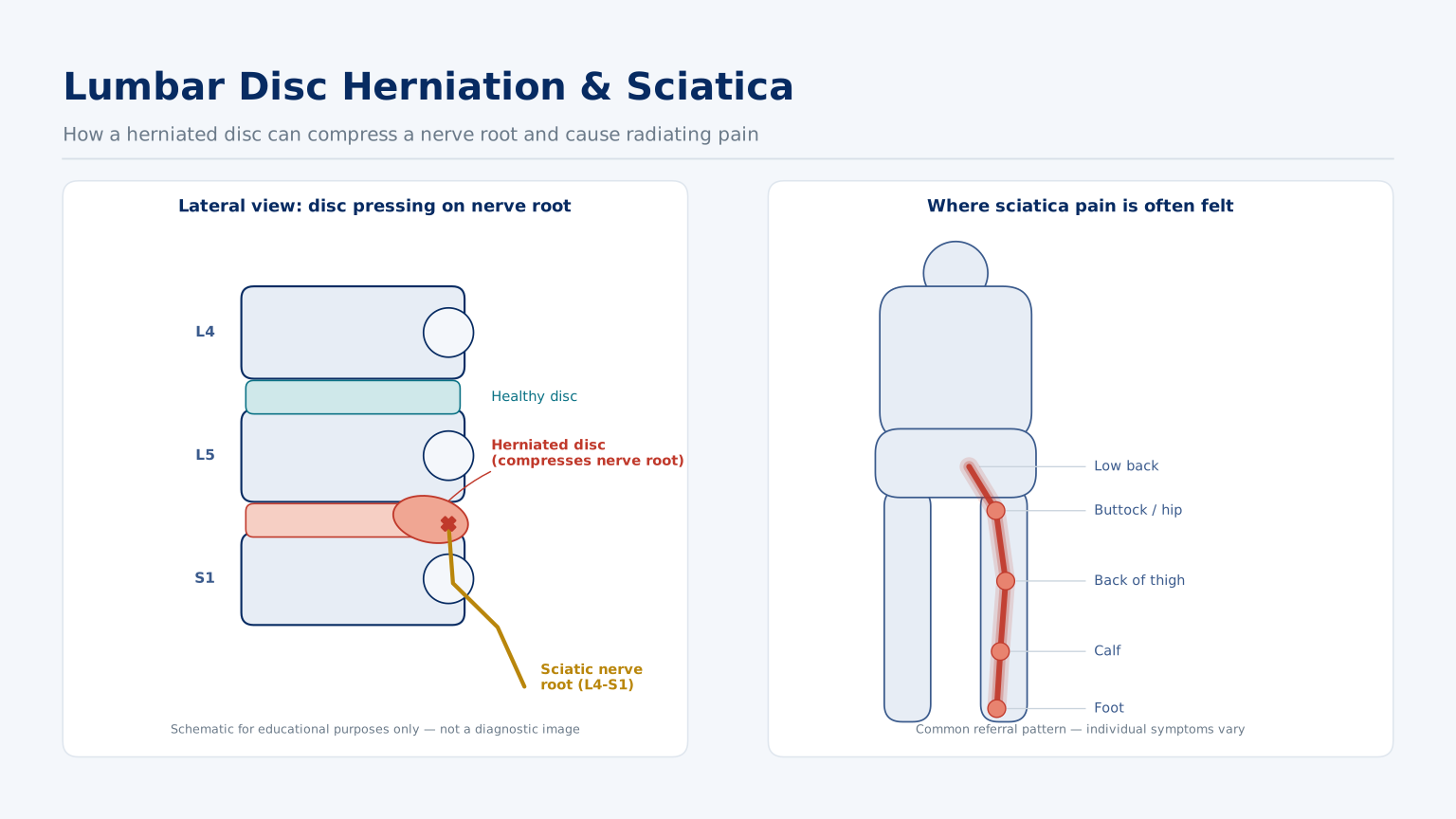
Back pain is one of the most common reasons people seek medical care—and when the pain comes from a herniated lumbar disc, the problem can extend far beyond an aching back.
A disc herniation can irritate or compress nearby nerve roots, potentially causing:
- lower back pain
- sciatica
- pain traveling into the buttock or leg
- numbness or tingling
- burning or electric-like nerve pain
- muscle weakness
- difficulty sitting, standing or walking
- reduced mobility and quality of life
Traditional treatment often begins conservatively with activity modification, physical therapy, anti-inflammatory medications and other nonsurgical approaches.
When symptoms persist, patients may be offered epidural injections or, in more severe cases, surgery.
But another minimally invasive approach has been studied for decades: medical oxygen-ozone therapy.
Clinical studies have investigated oxygen-ozone injections for lumbar disc herniation, radicular pain and sciatica, with several trials reporting improvements in pain and disability.
For people already researching systemic ozone therapies such as EBOO—Extracorporeal Blood Oxygenation and Ozonation, this raises an important question:
Could ozone therapy have a role in supporting people dealing with herniated discs, sciatica and related back conditions?
Let’s look at what the research actually says.
Quick Answer: Can Ozone Therapy Help a Herniated Disc?
Research suggests that certain forms of targeted medical oxygen-ozone therapy, particularly intradiscal, intraforaminal and paravertebral injections, may help reduce pain and disability associated with lumbar disc herniation in appropriately selected patients.
Researchers have proposed several possible mechanisms, including reduction of disc volume, modulation of inflammation and effects on pain-related pathways.
However, these studies generally involve localized ozone injections—not EBOO.
EBOO is a systemic blood-processing form of medical ozone therapy and should not be considered equivalent to an intradiscal ozone procedure.
What Is a Lumbar Disc Herniation?
Your spine is made of individual vertebrae separated by soft, shock-absorbing structures called intervertebral discs.
Each disc contains:
- a tough outer layer called the annulus fibrosus
- a softer, gel-like center called the nucleus pulposus
When part of the inner disc material pushes through or bulges against the outer portion of the disc, it may create a:
- bulging disc
- protruding disc
- herniated disc
- extruded disc
- slipped disc
These terms describe different patterns or degrees of disc displacement.
A herniated disc does not automatically cause pain.
Symptoms often develop when displaced disc material irritates or compresses a nearby spinal nerve.
What Is Sciatica?
Sciatica describes pain associated with irritation or compression of the sciatic nerve or the nerve roots that eventually form it.
Pain may travel from the lower back into:
- the buttock
- hip
- back of the thigh
- calf
- foot
Some patients also experience numbness, tingling or weakness.
Lumbar disc herniation is one of the most common causes of sciatica.
Why Can a Herniated Disc Hurt So Much?
Disc-related pain isn’t necessarily caused by mechanical pressure alone.
Two processes may occur simultaneously:
Mechanical Compression
A herniated disc may physically compress or irritate the nerve root.
Inflammation
Disc material and surrounding tissues may generate inflammatory signaling that contributes to nerve irritation and pain.
This combination helps explain why a relatively small disc herniation can sometimes cause substantial symptoms while another larger herniation may produce surprisingly little pain.
It also helps explain why researchers have investigated ozone therapy.
Ozone’s potential effects are not limited to the physical structure of the disc.
Researchers have also explored its influence on inflammatory, oxidative and biochemical pathways.
Why Is Medical Ozone Being Studied for Herniated Discs?
Medical ozone is a controlled mixture of oxygen and ozone administered using specialized medical equipment.
When used for lumbar disc disease, ozone has primarily been investigated through techniques such as:
- intradiscal injection
- intraforaminal injection
- periganglionic injection
- paravertebral intramuscular injection
Researchers have proposed several mechanisms that could potentially explain the clinical results.
1. Ozone May Reduce Disc Volume
One proposed mechanism of intradiscal ozone therapy involves the disc’s nucleus pulposus.
The nucleus contains proteoglycans that attract and retain water.
When an oxygen-ozone mixture is injected into the disc, researchers believe oxidation of components within the nucleus may reduce its ability to retain water.
That may decrease disc volume.
If the herniated portion becomes smaller, pressure on the adjacent nerve root may also decrease.
This is sometimes referred to as ozone nucleolysis or ozone chemonucleolysis.
Importantly, this proposed disc-volume effect relates specifically to intradiscal ozone injection.
It should not be attributed to systemic EBOO therapy.
2. Ozone May Influence Inflammatory Pathways
Nerve irritation from a herniated disc can involve inflammatory mediators in addition to physical compression.
Medical ozone has been investigated for its potential effects on inflammatory signaling and redox regulation.
Researchers have proposed that properly dosed ozone may produce a controlled oxidative stimulus that triggers downstream biological responses.
This concept is sometimes referred to as oxidative preconditioning or hormesis.
That may be relevant because inflammation surrounding the nerve root can contribute significantly to radicular pain.
3. Ozone May Affect Oxidative Stress and Cellular Signaling
Ozone itself is highly reactive and does not simply circulate throughout the body unchanged.
When medical ozone interacts with biological fluids, it rapidly produces secondary reaction products that can influence cellular signaling.
Research has explored ozone’s relationship with:
- glutathione
- antioxidant enzymes
- redox signaling
- inflammatory mediators
- immune signaling
- vascular function
These systemic mechanisms are among the reasons ozone therapy has also become relevant within functional and integrative medicine.
What Did the 2009 Randomized Trial Find?
One of the more important studies was published in Spine in 2009.
Researchers conducted a multicenter, randomized, double-blind, simulated-treatment-controlled trial involving 60 patients experiencing acute lower back pain from lumbar disc herniation.
Patients received either:
- lumbar paravertebral intramuscular oxygen-ozone injections
or
- simulated treatment
The patients were followed for six months.
The results were notable.
At six months:
61% of patients receiving oxygen-ozone therapy were pain-free compared with 33% of patients receiving simulated treatment.
The ozone-treated group also experienced:
- lower average pain scores
- improvements in back-pain-related disability
- reduced use of anti-inflammatory medication during portions of follow-up
No adverse events were reported in the trial.
The researchers concluded that paravertebral oxygen-ozone injections appeared to safely and effectively reduce pain and disability in patients with acute low back pain associated with lumbar disc herniation.
Research: Paoloni M, et al. Intramuscular oxygen-ozone therapy in the treatment of acute back pain with lumbar disc herniation. Spine. 2009. View the study on PubMed
What Did the 2003 Study of 600 Patients Find?
Another major study published in the American Journal of Neuroradiology evaluated 600 patients with lumbar disc herniation and nerve-root compression.
Patients received a combination of intradiscal and periganglionic oxygen-ozone injections.
One group received ozone alone.
Another group received ozone followed by corticosteroid and local anesthetic.
At six months, researchers reported successful outcomes in:
70.3% of patients receiving ozone therapy alone
and
78.3% of patients receiving ozone plus corticosteroid and anesthetic.
The authors concluded that oxygen-ozone therapy represented a useful minimally invasive treatment for lumbar disc herniation that had not responded to conservative therapy.
Research: Andreula CF, et al. Minimally invasive oxygen-ozone therapy for lumbar disk herniation. AJNR. 2003. View the study on PubMed
What Do Meta-Analyses Say About Ozone for Herniated Discs?
Individual studies are useful, but systematic reviews and meta-analyses can provide a broader picture of the evidence.
A 2012 systematic review examined randomized trials involving ozone treatment for lower back pain secondary to disc herniation.
Four randomized trials involving 861 patients were included in the pooled analysis.
At six months, ozone therapy was associated with a greater likelihood of pain relief compared with control interventions.
The pooled odds ratio was:
OR 2.66 — 95% CI 1.94–3.63
In other words, patients receiving ozone treatment were substantially more likely to experience pain improvement within the analyzed studies.
However, reviewers also highlighted methodological limitations within the available trials.
Those limitations are important when interpreting the findings.
Research: Magalhães FN, et al. Ozone therapy as a treatment for low back pain secondary to herniated disc: a systematic review and meta-analysis of randomized controlled trials. Pain Physician. 2012. View the study on PubMed
Another Large Meta-Analysis Examined Nearly 8,000 Patients
A separate meta-analysis reviewed 12 studies involving nearly 8,000 patients treated with oxygen-ozone therapy for herniated lumbar discs.
Researchers reported average improvements of approximately:
3.9 points in Visual Analog Scale pain scores
and
25.7 points on the Oswestry Disability Index.
Approximately 79.7% of patients demonstrated improvement according to the modified MacNab outcome scale.
The estimated complication rate in the included literature was approximately 0.064%.
These results are encouraging, although the quality and methodology of the underlying studies varied.
What Does Newer Research Show?
More recent reviews have continued to investigate ozone treatment for lumbar disc disease.
A systematic review of prospective studies reported an average improvement of approximately:
4.25 points on pain scores
and
20.57 points on the Oswestry Disability Index.
The researchers concluded that ozone therapy may be useful in selected cases of lumbar disc herniation that have not responded adequately to conservative treatment.
However, they also emphasized the need for additional high-quality randomized trials.
Another recent systematic review and meta-analysis examining randomized trials of intradiscal medical ozone found significant short-term improvements in pain and disability.
Importantly, the researchers noted that several studies had moderate or high risk of bias and called for stronger long-term evidence.
This gives us a balanced conclusion:
The clinical signal is promising and has persisted across several decades of research, but the evidence still isn’t perfect.
Does Ozone Therapy Have Long-Term Results?
One particularly interesting study followed patients after intradiscal ozone treatment for five and ten years.
Long-term studies are valuable because reducing pain for several weeks is very different from producing an improvement that persists for years.
The researchers followed patients with lumbar disc herniation treated with intradiscal ozone and reported durable clinical outcomes in a substantial portion of patients over long-term follow-up.
Some patients eventually required surgery, reinforcing an important point:
Ozone therapy will not eliminate the need for surgery in every patient.
But long-term observations suggest that appropriately selected patients may experience lasting improvement.
Research: Buric J, Rigobello L, Hooper D. Five and Ten Year Follow-up on Intradiscal Ozone Injection for Disc Herniation. International Journal of Spine Surgery. 2014. View the full study
Ozone Therapy vs. Surgery for a Herniated Disc
This isn’t necessarily an either/or question.
Many patients with lumbar disc herniation improve without surgery.
Typical conservative treatment may include:
- physical therapy
- therapeutic exercise
- temporary activity modification
- anti-inflammatory medications
- pain management
- epidural injections
- lifestyle modification
If conservative approaches fail, minimally invasive procedures may be considered.
Ozone has been studied as one possible option within that space.
Surgery may still be the most appropriate choice when there is:
- progressive neurological weakness
- serious nerve compression
- significant loss of motor function
- severe spinal instability
- cauda equina syndrome
- persistent disabling pain despite appropriate treatment
A qualified spine specialist should evaluate these situations.
What Is the Difference Between Targeted Ozone Therapy and EBOO?
This distinction is extremely important.
Targeted Oxygen-Ozone Injection
Most published lumbar-disc research involves ozone delivered:
- directly into the disc
- adjacent to the affected nerve
- around the neural foramen
- into paravertebral muscles
These procedures are designed specifically to address the affected spinal region.
EBOO
EBOO stands for Extracorporeal Blood Oxygenation and Ozonation.
During EBOO, blood circulates outside the body through a specialized extracorporeal system where it undergoes controlled oxygenation and ozonation before returning to the patient.
EBOO is therefore a systemic medical ozone therapy rather than a targeted spinal injection.
The two therapies should not be presented as equivalent.
Can EBOO Treat a Herniated Disc?
There currently is not strong clinical evidence demonstrating that EBOO itself shrinks or mechanically repairs a herniated lumbar disc.
The studies showing disc-volume changes primarily involve intradiscal ozone.
However, EBOO is being investigated and used within integrative medicine because systemic medical ozone interacts with biological pathways involving:
- redox signaling
- oxidative stress response
- inflammatory signaling
- vascular function
- immune signaling
- cellular metabolism
For someone dealing with a structural spine problem, EBOO should therefore be viewed—when medically appropriate—as a systemic supportive modality rather than a mechanical disc-repair procedure.
Learn more: What Is EBOO Therapy?
Could EBOO Be Used Alongside Other Back-Pain Treatments?
Potentially.
Functional and integrative medicine often combines different strategies rather than expecting a single therapy to address every component of a condition.
A person with lumbar disc disease may simultaneously have:
- mechanical compression
- muscular guarding
- inflammation
- impaired mobility
- deconditioning
- neuropathic pain
- sleep disruption
- reduced circulation
- stress-related muscle tension
That means treatment may require more than one approach.
Physical rehabilitation may address movement and strength.
Targeted interventions may address nerve or disc pathology.
Lifestyle modification may reduce contributors to chronic inflammation.
Systemic therapies may be considered for broader physiological support.
The best approach depends on the cause and severity of symptoms.
What Other Conditions Have Been Studied With Spinal Oxygen-Ozone Therapy?
Research involving oxygen-ozone has extended beyond a straightforward contained lumbar disc herniation.
Investigators have studied ozone in patients with:
Sciatica
Sciatica caused by nerve-root irritation from lumbar disc disease is one of the most extensively studied spine-related indications.
Lumbar Radiculopathy
Radiculopathy refers to symptoms caused by irritation or compression of a spinal nerve root.
Symptoms can include pain, tingling, numbness or weakness traveling into the leg.
Degenerative Disc Disease
Degenerative changes to spinal discs may contribute to chronic low-back pain and nerve irritation.
Some ozone studies have included patients with degenerative disc pathology.
Disc Protrusion
A disc protrusion is a form of disc displacement that may irritate adjacent nerves.
Chronic Low Back Pain
Studies have evaluated oxygen-ozone therapy in selected patients with both acute and chronic back pain.
Spinal Osteoarthritis and Related Conditions
Some clinical research has examined oxygen-ozone injections in patients experiencing back pain associated with degenerative spinal changes rather than disc herniation alone.
The evidence varies significantly by condition and procedure.
Is Ozone Therapy an Anti-Inflammatory?
Calling ozone simply an “anti-inflammatory” is an oversimplification.
Medical ozone initially creates a controlled oxidative stimulus.
Researchers believe that this temporary oxidative challenge can activate downstream adaptive pathways involved in:
- antioxidant defense
- redox regulation
- inflammatory signaling
- immune modulation
This phenomenon is frequently referred to as oxidative hormesis.
The goal isn’t to eliminate oxidation.
The goal is to stimulate an appropriate biological response to a controlled oxidative signal.
Why Ozone Therapy Fits Into Functional and Integrative Medicine
Functional and integrative medicine tends to look beyond the location of a symptom.
Instead of asking only:
“Where does it hurt?”
the practitioner may also consider:
- Why is inflammation persisting?
- How well is the patient recovering?
- How strong are the muscles supporting the spine?
- Is metabolic health contributing?
- Are nutrient deficiencies affecting repair?
- Is sleep interfering with healing?
- Is the person moving enough—or too much?
- Is nerve irritation continuing even after mechanical pressure decreases?
That broader perspective helps explain growing interest in medical ozone therapy.
Ozone isn’t intended to replace structural evaluation.
Rather, it may fit into a larger strategy involving both structural treatment and systemic support.
Other Therapies That May Support Back Pain & Recovery
Treating a herniated disc or persistent lumbar pain often requires a multimodal plan.
Depending on the diagnosis and individual medical history, patients may also investigate supportive therapies such as:
Physical Therapy and Strengthening
Physical rehabilitation remains one of the foundations of conservative treatment.
A properly designed program may help improve:
- core stability
- spinal mechanics
- flexibility
- strength
- mobility
- posture
- movement confidence
PEMF Therapy
Pulsed Electromagnetic Field therapy (PEMF) uses electromagnetic fields to interact with tissues.
PEMF has been studied for pain, musculoskeletal recovery and cellular signaling.
It does not mechanically repair a herniated disc, but it may be considered as a complementary recovery modality depending on the individual’s condition.
Red Light and Near-Infrared Therapy
Photobiomodulation using red and near-infrared wavelengths has been investigated for pain, inflammation and tissue recovery.
It may be incorporated into a broader rehabilitation or recovery program.
Hyperbaric Oxygen Therapy
Hyperbaric oxygen therapy increases the amount of oxygen carried within plasma under increased atmospheric pressure.
HBOT has established medical indications and is also being investigated for additional applications involving tissue recovery and inflammation.
It is not an established treatment for correcting lumbar disc herniation itself, but some integrative practices may consider oxygen-based therapies as part of broader recovery programs.
Medical Ozone Therapy
Depending on practitioner training, local regulations and patient eligibility, medical ozone may include:
- Major Autohemotherapy
- High-Dose Ozone
- targeted oxygen-ozone procedures
- EBOO
These procedures differ considerably in how ozone is administered and should not be treated as interchangeable.
When Back Pain Requires Immediate Medical Attention
Most back pain is not an emergency.
However, certain symptoms require prompt medical evaluation.
Seek immediate care for symptoms such as:
- sudden loss of bowel control
- sudden loss of bladder control
- numbness around the groin or saddle region
- rapidly worsening leg weakness
- inability to move the leg normally
- severe back pain following major trauma
- back pain accompanied by high fever
- unexplained severe neurological symptoms
These symptoms can indicate serious spinal or neurological conditions requiring urgent treatment.
The Bottom Line: Ozone Therapy, EBOO and Lumbar Disc Herniation
Medical oxygen-ozone therapy has a larger body of research for lumbar disc herniation than many people realize.
Randomized trials, prospective studies, meta-analyses and long-term follow-up studies have reported improvements in:
- pain
- sciatica
- disability
- medication use
- functional outcomes
Researchers have proposed several potential mechanisms, including:
- reduction in disc volume following intradiscal ozone
- decreased nerve-root irritation
- modulation of inflammatory signaling
- changes in oxidative and antioxidant pathways
- effects on local circulation and tissue signaling
However, the route of ozone administration matters enormously.
The strongest disc-specific evidence involves targeted intradiscal, intraforaminal or paravertebral ozone treatment—not EBOO.
EBOO is a systemic form of medical ozone therapy being explored within integrative and functional medicine for its potential effects on redox balance, inflammatory signaling, circulation and cellular physiology.
For patients experiencing herniated-disc pain, sciatica or chronic lumbar symptoms, the most appropriate strategy may involve a combination of structural evaluation, rehabilitation, conventional care and carefully selected complementary therapies.
The goal isn’t simply to quiet the pain.
It’s to understand why the pain is occurring, what structures are involved and which combination of therapies gives the patient the best opportunity to function and recover.
Frequently Asked Questions
Can ozone therapy shrink a herniated disc?
Research involving intradiscal ozone injection suggests that oxidation of proteoglycans inside the nucleus pulposus may reduce water retention and disc volume. This may decrease pressure on nearby nerve roots. This mechanism should not be attributed to EBOO or other systemic ozone therapies.
Does ozone help sciatica?
Several clinical studies have reported improvements in sciatica and radicular pain associated with lumbar disc herniation following targeted oxygen-ozone therapy.
Is ozone therapy better than an epidural steroid injection?
Some studies have compared oxygen-ozone techniques with steroid-based injections and reported favorable results. However, the appropriate treatment depends on the patient’s diagnosis, anatomy, symptoms and medical history.
Is EBOO used for back pain?
EBOO is a systemic medical ozone procedure rather than a targeted spinal treatment. There is not currently strong evidence showing that EBOO mechanically corrects a herniated disc. Some integrative practitioners may consider systemic ozone therapy as part of a broader wellness or recovery strategy.
Is ozone therapy surgery?
No. Oxygen-ozone injection procedures are minimally invasive procedures rather than open surgery.
Can ozone therapy prevent back surgery?
Some patients in ozone studies improved without subsequently requiring surgery. However, ozone cannot guarantee that surgery will be avoided, and some spinal conditions require surgical treatment.
How quickly does ozone work for a herniated disc?
Study protocols and response times vary. Some patients report improvement relatively early, while others improve gradually over several weeks or months.
Is ozone therapy FDA approved for herniated discs?
Ozone therapy should not be represented as an FDA-approved treatment for curing lumbar disc herniation. Patients should discuss regulatory status, evidence, alternatives, benefits and risks with a qualified healthcare professional.
What is the difference between an intradiscal ozone injection and EBOO?
An intradiscal ozone procedure introduces an oxygen-ozone mixture directly into a spinal disc using image guidance. EBOO circulates blood through an extracorporeal oxygenation and ozonation system before returning it to the body. They are entirely different procedures.
What type of doctor should evaluate a herniated disc?
Depending on symptoms, evaluation may involve a primary-care physician, physiatrist, neurologist, orthopedic spine specialist, neurosurgeon, pain-management physician or interventional radiologist.
Medical Research & References
Paoloni M, et al. Intramuscular oxygen-ozone therapy in the treatment of acute back pain with lumbar disc herniation: a multicenter randomized double-blind clinical trial. Spine. 2009. https://pubmed.ncbi.nlm.nih.gov/19478653/
Andreula CF, et al. Minimally invasive oxygen-ozone therapy for lumbar disk herniation. American Journal of Neuroradiology. 2003. https://pubmed.ncbi.nlm.nih.gov/12748111/
Magalhães FN, et al. Ozone therapy as a treatment for low back pain secondary to herniated disc: a systematic review and meta-analysis of randomized controlled trials. Pain Physician. 2012. https://pubmed.ncbi.nlm.nih.gov/22430658/
Buric J, Rigobello L, Hooper D. Five and ten year follow-up on intradiscal ozone injection for disc herniation. International Journal of Spine Surgery. 2014. https://pmc.ncbi.nlm.nih.gov/articles/PMC4325503/
Steppan J, et al. A meta-analysis of the effectiveness and safety of ozone treatments for herniated lumbar discs. Journal of Vascular and Interventional Radiology. 2010.
The Role of Ozone Treatment as Integrative Medicine: An Evidence and Gap Map. 2023. https://pmc.ncbi.nlm.nih.gov/articles/PMC9885089/
Medical Disclaimer: This information is intended for educational purposes only and should not be interpreted as medical advice or as a recommendation to diagnose, treat, cure or prevent any disease. Ozone therapy and EBOO are not substitutes for appropriate medical diagnosis or medically necessary treatment. Anyone experiencing neurological symptoms, severe back pain or suspected disc herniation should be evaluated by an appropriately qualified healthcare professional.
In Health,
Ginger Delph
Founder & Owner | Core iV Health & Wellness Center
Advanced IV Therapy | Biohacking | Regenerative Wellness
📍 Herndon, VA
📞 1-866-426-7348
✉️ ginger@coreivtherapy.com
🌐 coreivtherapy.com
“Your health is your greatest asset. Invest wisely.”
© Copyright 2026 CoreIV Elite