Six Potential Benefits of Ozone Therapy, According to Research
Ozone therapy has become a frequent topic of conversation within the chronic illness and integrative medicine communities.
Medical-grade ozone has long been used as a tool to sanitize equipment and control infection, but over time, researchers and clinicians began studying what happens when a controlled ozone-oxygen mixture is introduced into the body itself.
What they found is a molecule with several proposed mechanisms of action—and a growing, if still developing, body of clinical research behind it.
Below are six potential benefits researchers have studied, along with what the current evidence actually supports.
Quick Answer: What Are the Main Benefits of Ozone Therapy?
Research has explored medical ozone for its potential role in immune and inflammatory regulation, antimicrobial support, redox and cellular signaling, pain-related conditions, circulation and tissue oxygenation, and skin and wound healing. These are areas of active research rather than proven cures, and the strength of evidence varies by application. Ozone therapy, including advanced systemic approaches like EBOO, is generally considered a complementary tool rather than a replacement for medically necessary care.
What Is Ozone Therapy?
Ozone is a highly reactive form of oxygen made of three oxygen atoms (O₃) instead of the two atoms (O₂) found in the air we breathe.
That extra atom makes ozone unstable and reactive—which is exactly why medical ozone is never inhaled and is instead administered through controlled methods such as autohemotherapy, insufflation or EBOO (Extracorporeal Blood Oxygenation and Ozonation).
When properly administered, researchers believe ozone triggers a controlled oxidative signal that may stimulate the body’s own adaptive and regulatory pathways, rather than simply adding oxygen to the bloodstream.
For a deeper look at how ozone and EBOO work, see our full guide to ozone therapy and EBOO in functional and integrative medicine.
Six Potential Benefits of Ozone Therapy
1. Supporting Immune Function and Inflammation Balance
Research has examined ozone’s relationship with immune signaling and inflammatory markers.
Inflammation is a normal, necessary immune response—but when it becomes persistent or poorly regulated, it has been linked to a wide range of chronic conditions and to oxidative stress, an imbalance between free radicals and the body’s antioxidant defenses.
Some people who receive ozone therapy report a subjective reduction in symptoms associated with chronic inflammation. Researchers describe ozone’s effect here as immunomodulatory rather than simply anti-inflammatory—meaning it may help regulate immune activity rather than suppress it outright.
2. Antimicrobial Properties Researchers Have Studied
Bacteria continue to develop resistance to conventional antibiotics, which has driven ongoing interest in alternative and adjunctive approaches to infection control.
Ozone has a long history of use in sterilization and wound-related infection control, and laboratory research has documented antimicrobial activity against various bacteria, fungi and viruses.
This is an area of genuine research interest, but it should not be interpreted as a guarantee that ozone therapy will resolve a specific infection on any particular timeline. Anyone with an active infection should be evaluated and treated by a qualified healthcare professional.
3. Supporting the Body’s Own Redox and Detox Pathways
Ozone therapy is sometimes described online as a “detox” treatment. That framing oversimplifies the science.
Your liver, kidneys, lungs and lymphatic system remain the body’s primary detoxification organs—ozone therapy does not replace them.
What researchers have studied is ozone’s potential effect on redox signaling and antioxidant pathways, including enzymes such as glutathione, superoxide dismutase and catalase. Some research suggests controlled ozone exposure may stimulate the body’s own adaptive antioxidant response—a more accurate description than “detoxing the blood.”
4. Potential Pain-Relief Applications
Back pain and related musculoskeletal conditions are among the most common reasons people seek medical care.
Researchers have studied ozone’s anti-inflammatory and immunomodulatory properties as a potential contributor to pain relief, particularly for conditions involving nerve irritation and localized inflammation, such as lumbar disc herniation and sciatica.
A 2024 systematic review and meta-analysis of ozone infiltration for low back pain found favorable patient-reported outcomes across the studies analyzed, while also noting the need for more standardized, high-quality trials.
Read more: Ozone Therapy for Lumbar Disc Herniation, Sciatica & Back Pain.
5. Supporting Circulation and Tissue Oxygenation
Tissues depend on adequate blood flow to receive the oxygen and nutrients they need to function and repair themselves.
Researchers have investigated ozone’s relationship to microcirculation, red blood cell behavior and tissue oxygen delivery, including in vascular conditions such as peripheral artery disease.
Interestingly, some controlled studies have found symptom improvement without a significant measurable change in arterial blood flow itself—suggesting that mechanisms other than simply “more blood flow” may be contributing to the observed effects.
6. Skin and Wound-Healing Support
In recent years, ozone has drawn interest for its potential role in skin health and wound care.
Because oxygen delivery is essential to cellular repair, researchers have studied whether improved local oxygenation through ozone exposure may support skin cell recovery and wound closure.
Systematic reviews of ozone therapy for chronic wounds, including diabetic foot ulcers, have reported improved healing outcomes in several of the studies analyzed, though reviewers also note variability in study quality and protocols.
Is Ozone Therapy Right for You?
Ozone therapy is not a one-size-fits-all treatment, and it is not appropriate for everyone.
Appropriateness depends on your health history, current medications, any underlying medical conditions and your specific goals. Certain conditions and medications may make ozone therapy inadvisable, which is why proper screening by a trained provider matters.
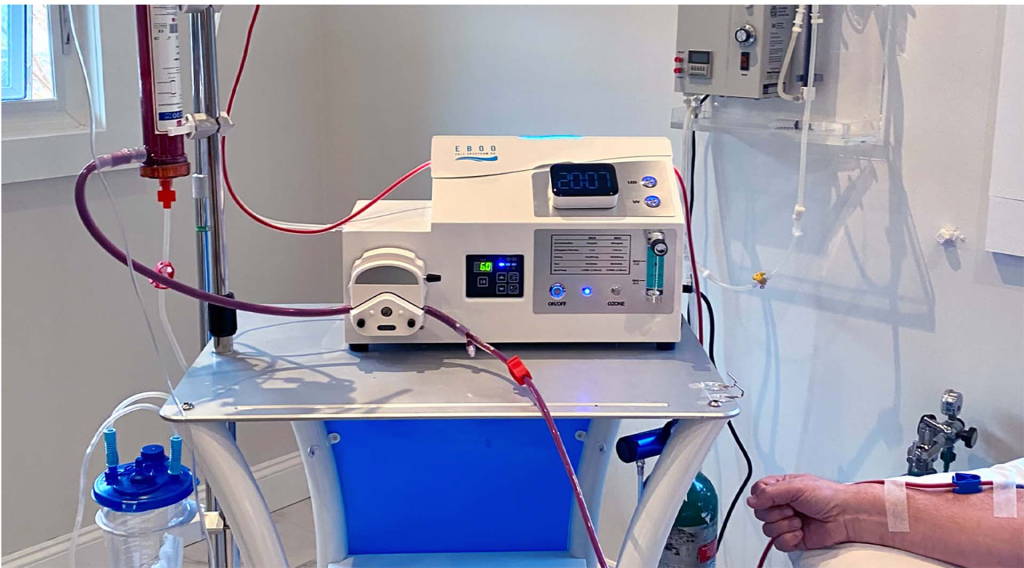
If you’re exploring systemic ozone options, EBOO—Extracorporeal Blood Oxygenation and Ozonation—represents one of the most advanced approaches available, using continuous extracorporeal circulation to process a larger volume of blood than traditional autohemotherapy.
Learn more: What Is EBOO Therapy?
The Bottom Line
Ozone therapy is not a miracle cure, and no responsible practitioner should present it as one.
But the research base behind it—spanning immune modulation, antimicrobial properties, redox signaling, pain-related conditions, circulation and wound healing—is more substantial than many people realize, even as researchers continue to call for more standardized, large-scale clinical trials.
If you have questions about whether ozone therapy, or an advanced systemic approach like EBOO, could fit into your health plan, that conversation is best had with a qualified integrative or functional medicine provider who can evaluate your full health history.
Frequently Asked Questions
What are the main benefits associated with ozone therapy?
Research has explored ozone for its potential role in immune and inflammatory regulation, antimicrobial activity, redox and cellular signaling, pain-related conditions, circulation and tissue oxygenation, and skin and wound healing. These reflect areas of research interest, not guaranteed outcomes.
Does ozone therapy really boost the immune system?
Researchers describe ozone’s effect on the immune system as immunomodulatory—meaning it may help regulate immune activity rather than simply “boosting” it. Results vary by individual and condition.
Can ozone therapy treat an infection?
Ozone has documented antimicrobial properties in laboratory research and a long history of use in infection control and sterilization. It should not be relied upon as a sole treatment for an active infection without evaluation and guidance from a qualified healthcare professional.
Does ozone therapy detox the blood?
“Blood detox” is a commonly used but imprecise description. The liver, kidneys and other organs remain responsible for detoxification. Ozone therapy is more accurately described as a treatment studied for its effects on redox signaling and antioxidant pathways.
Can ozone therapy help with back pain?
Multiple studies have examined ozone therapy for back pain, including conditions involving lumbar disc herniation and sciatica, with several reporting favorable patient-reported outcomes. Evidence quality varies by study, and ozone therapy should be discussed alongside conventional care rather than as a replacement for it.
Is ozone therapy the same as EBOO?
No. EBOO (Extracorporeal Blood Oxygenation and Ozonation) is one specific, advanced form of systemic ozone therapy. Other forms include Major Autohemotherapy, high-dose ozone and localized insufflation.
Is ozone therapy safe for everyone?
No. Appropriateness depends on individual health history, current medications and underlying conditions. Ozone therapy should only be administered after proper screening by a trained, qualified professional using medical-grade equipment.
Is ozone therapy FDA approved?
Ozone therapy should not be represented as an FDA-approved treatment for curing or treating specific diseases. Patients should discuss regulatory status, evidence, alternatives, benefits and risks with a qualified healthcare professional.
Where can I find EBOO therapy near me?
EBOONearMe.net provides educational information about EBOO, medical ozone therapy and providers offering advanced ozone therapies. Learn more about EBOO Therapy or find EBOO therapy near you.
Medical Research & References
Elvis AM, Ekta JS. Ozone Therapy: A Clinical Review. Journal of Natural Science, Biology and Medicine. 2011. National Library of Medicine / PubMed Central
Bocci V. Scientific and Medical Aspects of Ozone Therapy: State of the Art. Archives of Medical Research. 2006. PubMed PMID: 16624639
The Effectiveness of Ozone Infiltration on Patient-Reported Outcomes in Low Back Pain: A Systematic Review and Meta-Analysis. 2024. National Library of Medicine / PubMed Central
Ozone as a Vascular Therapy: A Review. 2011. PubMed PMID: 21446774
Ozone Therapy for the Treatment of Chronic Wounds: A Systematic Review. 2018. PubMed PMID: 29536625
Medical Disclaimer: This article is provided for educational purposes only and is not intended to diagnose, treat, cure or prevent any disease. Medical ozone and EBOO should not replace appropriate medical evaluation or medically necessary treatment. Individual eligibility, potential risks and expected benefits should be discussed with a qualified healthcare professional.
In Health,
Ginger Delph
Founder & Owner | Core iV Health & Wellness Center
Advanced IV Therapy | Biohacking | Regenerative Wellness
📍 Herndon, VA
📞 1-866-426-7348
✉️ ginger@coreivtherapy.com
🌐 coreivtherapy.com
“Your health is your greatest asset. Invest wisely.”